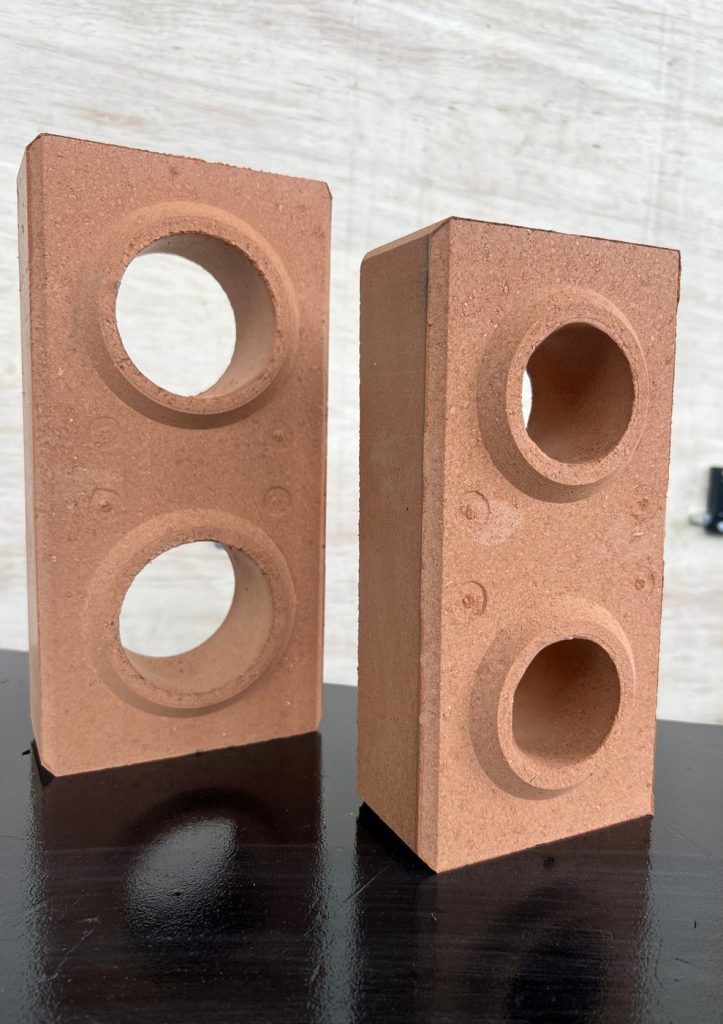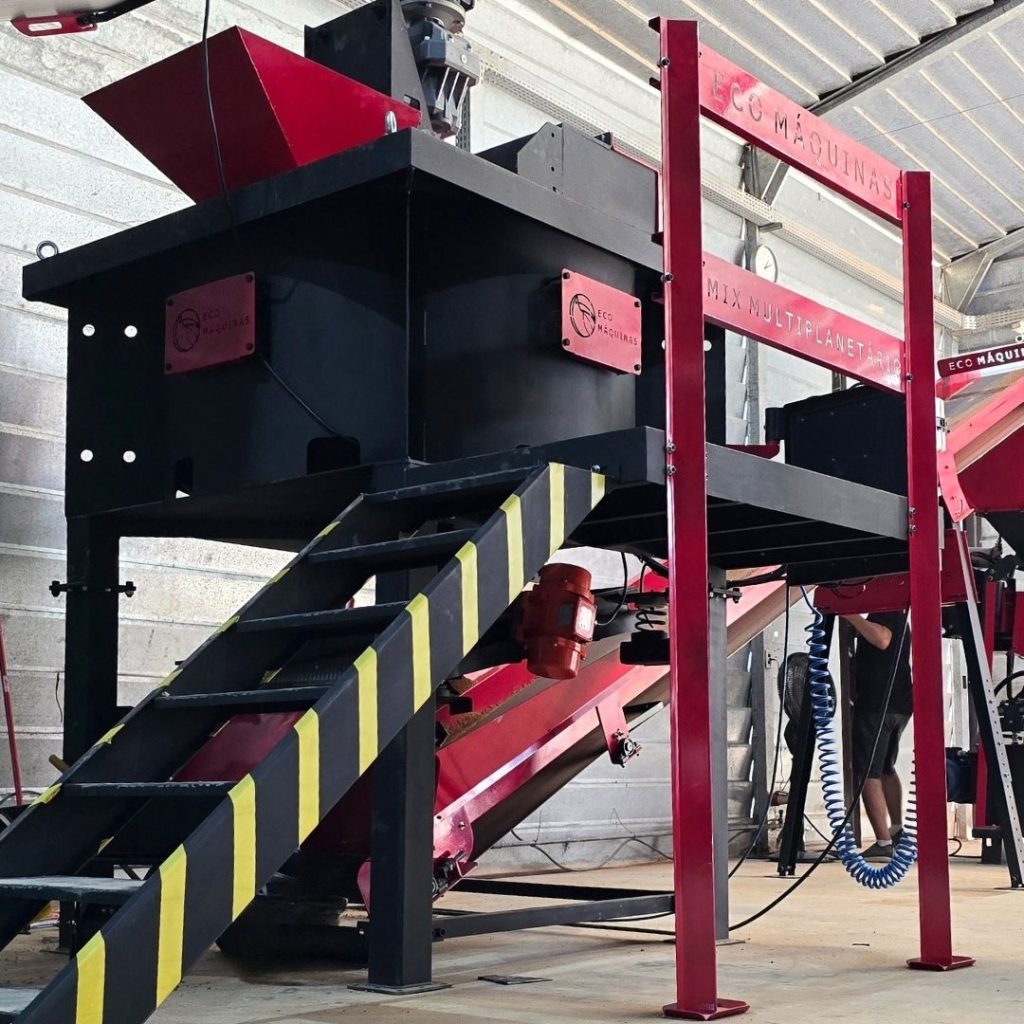
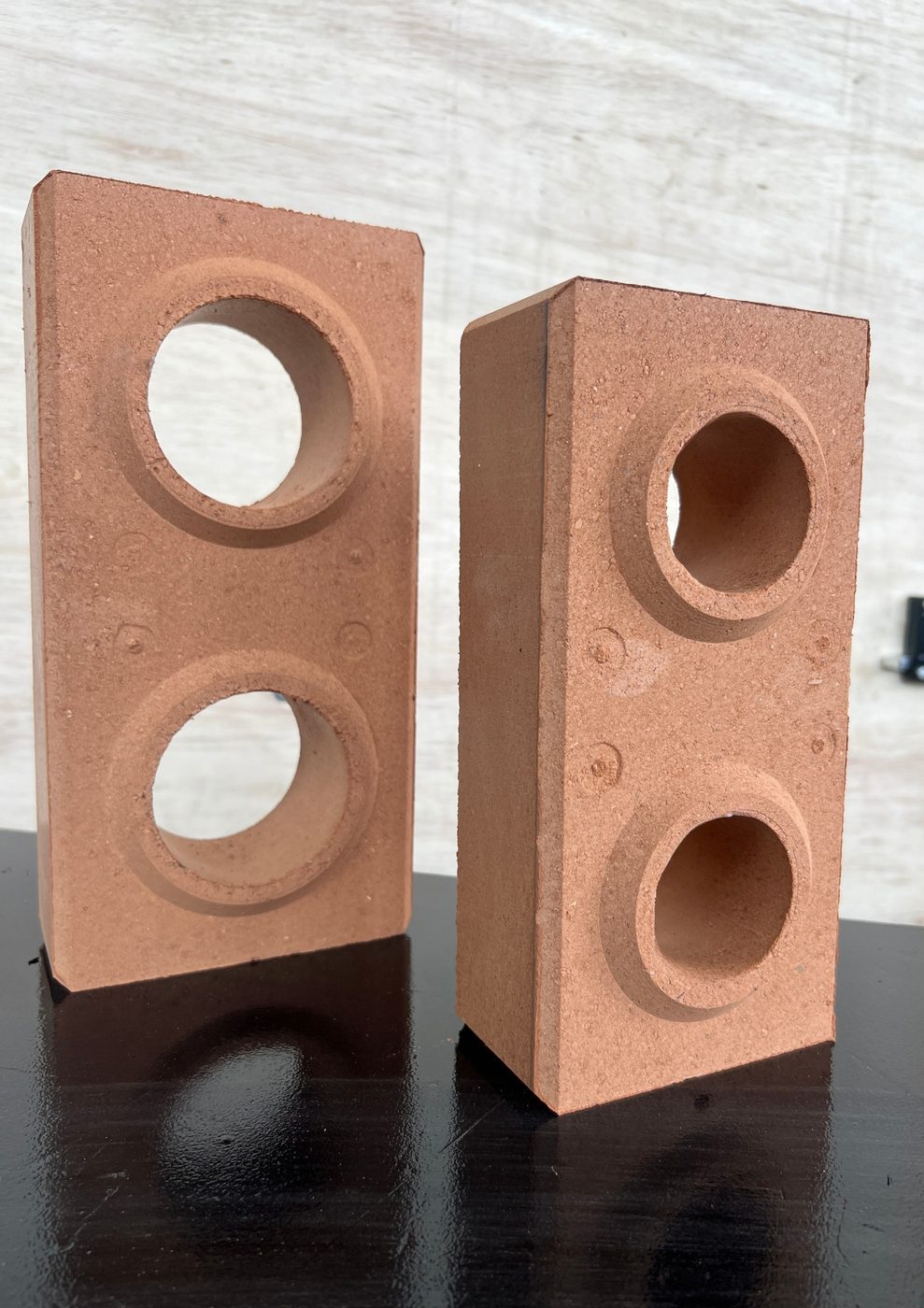
Are eco bricks strong? What the standards actually require
It is almost everyone’s first question, and it is a fair one. A material that never sees a kiln, made from the soil of the site itself, pressed in a machine that fits in a small shed — the scepticism is natural.
The objective answer: there is a standard, there is a test and there is an acceptance criterion. This is not an informal material.
What the standard requires
For the soil-cement brick, NBR 8491 sets a minimum average strength of 2.0 MPa at 7 days. That is the floor — the minimum for a batch to be accepted.
The full set is larger:
- NBR 8491 and 8492 — the soil-cement brick and the test method
- NBR 10833 — manufacturing with a hydraulic press
- NBR 10834 and 10836 — the hollow soil-cement block
In other words: there is a defined procedure to produce, a method to test, and a number to pass or fail. That is the opposite of an improvised material.
The floor is low, and that is a good thing
Two megapascals is deliberately conservative — a standard works with minimums, not with market averages. With selected soil, the right mix, a high-pressure press and proper curing, going well beyond that level is common.
And here is the point almost nobody explains: the strength of an eco brick is a process variable, not a fixed property of the material. Two bricks from the same machine, on the same day, can differ significantly if the process drifted.
The four things that decide it
1. The soil. Ideally sandy, with a controlled fraction of clay and silt. Very clayey soil swells and shrinks. Pure sand gives no cohesion. When the local soil will not do, the mix is corrected — the problem is not ignored.
2. The mix. Cement sits around 8% to 10%. Cutting below that range to save money is the fastest way to produce a batch that fails the standard.
3. The pressure. The eco brick gains strength through compaction. A high-pressure hydraulic press delivers a density a manual press cannot reach — and density, here, is strength.
4. The curing. The most neglected stage and the one that ruins most batches. Curing starts right after pressing and continues for 3 to 7 days, depending on the cement, with the piece always moist. ABNT considers curing complete at 28 days, though in practice most builders use the bricks right after moist curing.
Control those four and you control the strength. Control none of them and you will produce bad brick — and soil-cement will not be to blame.
“But it takes on moisture”
It does. The brick absorbs water like any ceramic material — ordinary brick absorbs it too. The difference is that here nobody pretends otherwise.
So two measures are not optional: waterproofing the foundation, so moisture does not rise by capillarity into the wall, and a water repellent on external faces, reapplied every 3 to 5 years when the wall is left exposed.
With that done, it behaves like any well-built masonry.
How to hold a supplier to it
If you are buying finished brick, three questions settle it:
- What is the batch’s average strength at 7 days, and by which test?
- What mix and what type of cement were used?
- How many days of moist curing did the batch get?
A serious supplier answers all three without hesitating. Anyone who cannot probably does not know what they are selling either.
And if you are going to produce, those same three questions become your internal quality control. It is the minimum required to sleep soundly with your own build.
Next: see how a soil-cement brick is made, from soil to pallet.