
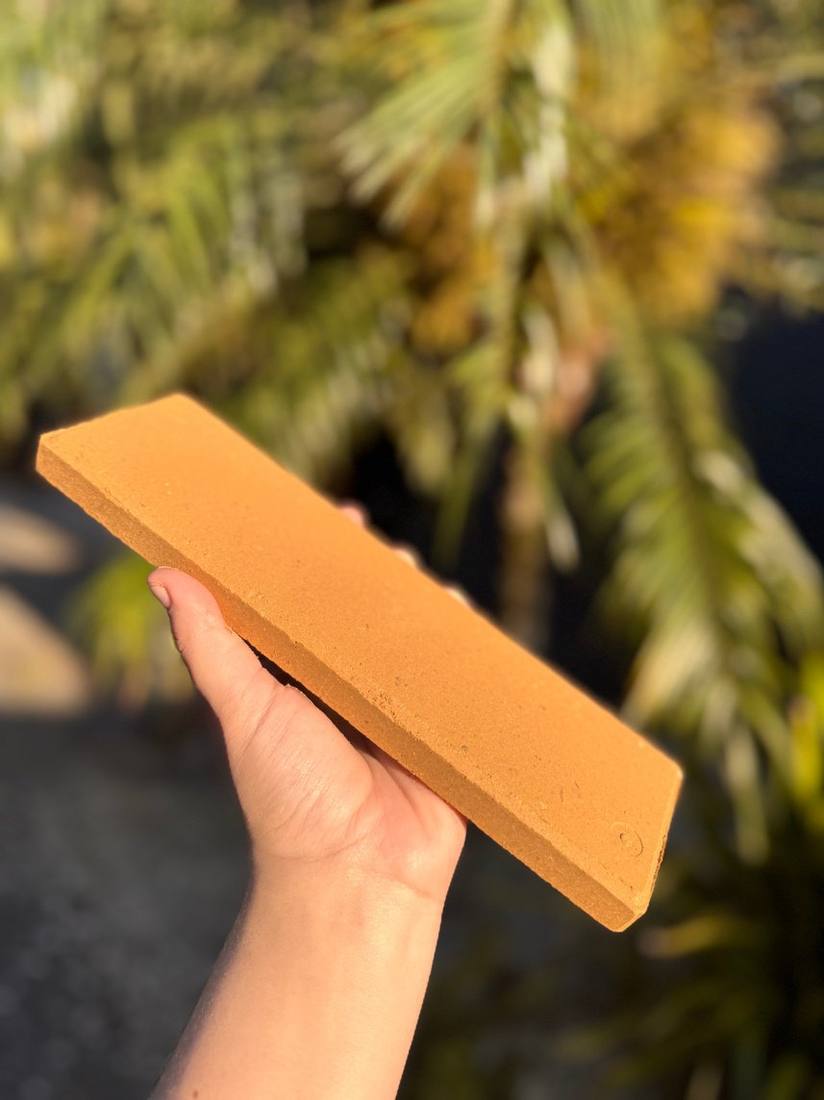
From earth to finished product
Raw material
Selection and validation of soil, waste or stone dust. The right dosage with cement defines the strength.
Mixing
In the planetary mixer or multiprocessor: crushes, mixes, sieves and moistens the mix evenly.
Pressing
The press compacts the mix at high pressure, forming interlocking bricks, blocks, floors and tiles.
Curing
The piece is kept moist for 3 to 7 days, depending on the cement, to reach full strength — no firing, no kiln.
What becomes a brick?
The base is soil-cement — local soil mixed with cement and water — but Eco technology accepts a wide range of materials and waste:

Curing methods
Curing ensures the brick’s final strength. It must start right after pressing and continue for 3 to 7 days, depending on the cement, keeping the piece always moist. In every method the bricks are covered with plastic film after stacking. Choose the method to fit your setup:
Storage and stacking
How you store directly affects final quality. Follow best practices to avoid losses:
Straight from the machine to the pallet: bricks come out pressed and are already stacked on the pallet they stay on until they reach the customer.
A covered, dry place sheltered from wind — draughts dry the piece out and cost moisture — protected from rain and direct sun, on pallets or racks, never straight on the ground.
Stacks of at most 5 crossed courses for stability and to avoid cracks in the bottom pieces.
Separate by batch and manufacturing date to control curing age and stock rotation.
Brazilian standard ABNT requires 28 days for full curing. In practice, most builders use the bricks right after moist curing — 3 to 7 days, depending on the cement.